Understanding the financial responsibilities associated with a grondhuur plot in Suriname is crucial for foreigners looking to invest in property. This article delves into who pays for a grondhuur plot built on by a foreigner, the legal framework surrounding these transactions, and practical tips for navigating the process.
Understanding Grondhuur in Suriname
Grondhuur, or leasehold land, is a significant aspect of holding property in Suriname. Land is held in two main forms, eigendom (full ownership) and grondhuur, a limited real right on land that stays the property of the State. Grondhuur on domain land is issued under the Decreet Uitgifte Domeingrond (S.B. 1982 no. 11), and article 14(3) of that decree sets the term at grant at no less than fifteen and no more than forty years; for titles issued before 1 July 1982 the Decreet rechtstoestand vóór 1 juli 1982 uitgegeven gronden (S.B. 1982 no. 12) applies instead. An extension is possible for grondhuur, but it is not automatic and it has to be applied for in time.
For foreigners, the acquisition of a grondhuur plot is subject to specific regulations. Foreigners can only lease state land through local companies or with the approval of the Council of Ministers. This means that while a foreigner can build on a grondhuur plot, they must first navigate the complexities of obtaining the lease legally.
Who is Responsible for Costs?
When it comes to who pays for a grondhuur plot built on by a foreigner, the responsibility typically falls on the lessee, which in this case would be the foreigner or the local company acting on their behalf. The costs involved can be categorized into several areas:
1. Lease Payments
The primary cost associated with a grondhuur plot is the annual lease payment. This amount is determined by the Surinamese government and can vary based on the location and size of the land. As of the latest information available, the specific lease amounts are not publicly disclosed and can fluctuate. It is advisable for potential lessees to consult the relevant government authorities or a local real estate agent to obtain accurate figures.
2. Construction Costs
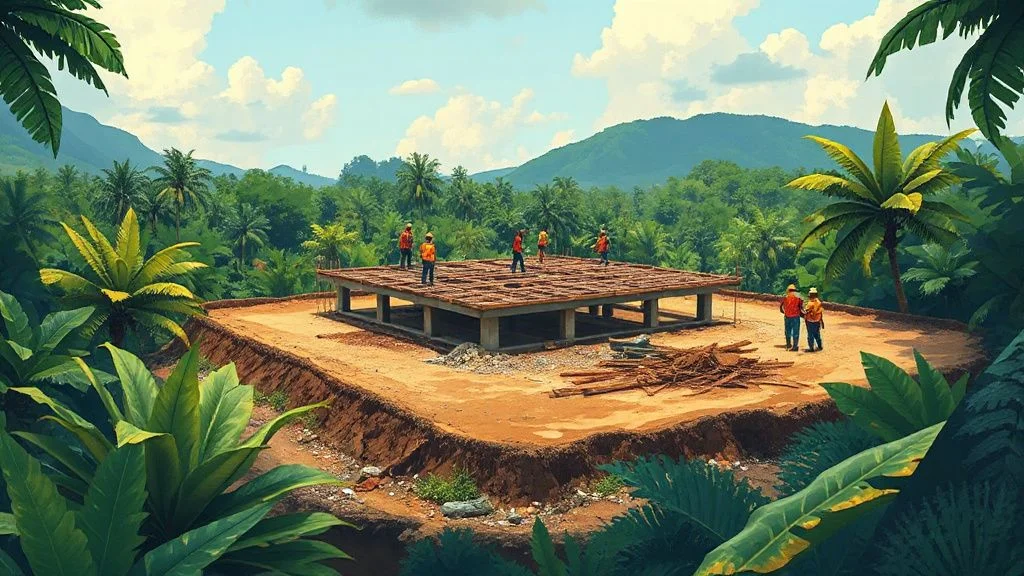
Once a foreigner secures a grondhuur plot, they are responsible for all construction costs associated with building on the land. This includes expenses for materials, labor, permits, and any other associated fees. It is essential to budget adequately for these costs, as they can vary significantly based on the project's scope and the local market conditions.
3. Maintenance and Utility Costs
In addition to initial construction costs, the lessee must also cover ongoing maintenance and utility costs. This includes regular upkeep of the property, landscaping, and payment for utilities such as water and electricity. Given Suriname's tropical climate, it is crucial to factor in costs related to air conditioning and pest control, which can be significant.
Legal Framework and Obligations
Foreigners looking to build on a grondhuur plot must navigate a complex legal framework. The key legal documents and regulations include:
1. Lease Agreement
The lease agreement is a critical document that outlines the terms and conditions of the grondhuur arrangement. It specifies the duration of the lease, the annual payment, and any restrictions on the use of the land. It is advisable for foreigners to have this agreement reviewed by a legal professional familiar with Surinamese property law to ensure their interests are protected.
2. Building Permits
Before building starts you need a building permit, and it does not come from a local authority: article 1(1)(a) of the Bouwwet (G.B. 1956 no. 30) forbids building without the prior written permission of the Directeur van Openbare Werken en Verkeer, and the application goes to that office. The process can take time and may involve inspections and further approvals, so engaging an architect or contractor who has been through it can help avoid delays. Whoever pays for the works, it is the permit holder who answers for building without one or in deviation from the approved plan.
3. Staying Within the Conditions of the Grant
What limits the use of a grondhuur plot is the purpose for which it was granted, as stated in the beschikking, together with the building permit requirement in the Bouwwet. There is no municipal zoning plan to comply with as well, because Suriname has districts and ressorten and no municipalities. Using the land for something other than the granted purpose, or building without the Directeur's permission, is what puts the right at risk.
Practical Tips for Foreigners
Securing a grondhuur plot and building on it as a foreigner can be a complex process. Here are some practical tips to navigate this landscape effectively:
1. Engage Local Professionals
Working with local real estate agents, lawyers, and contractors can provide invaluable insights into the property market and legal requirements. These professionals can help you understand the nuances of Surinamese property law and ensure that you comply with all necessary regulations.
2. Conduct Thorough Research
Before committing to a lease, conduct thorough research on the area where you intend to build. Consider factors such as accessibility, proximity to amenities, and the overall development potential of the neighborhood. This research will help you make an informed decision and potentially increase the value of your investment.
3. Understand the Risks
Investing in a grondhuur plot carries inherent risks, particularly for foreigners. Be aware that lease agreements can be subject to changes in government policy, and there is always the possibility of disputes over land use. Consulting with legal professionals can help mitigate these risks and provide clarity on your rights and obligations.
4. Plan for the Long Term
Since grondhuur leases are typically for a fixed term, it is essential to plan for the long term. Consider how the lease renewal process works and what steps you will need to take as your lease approaches its expiration. This foresight can help you avoid disruptions to your property use and investment.
Conclusion
In summary, when a foreigner builds on a grondhuur plot in Suriname, they are primarily responsible for the associated costs, including lease payments, construction, and ongoing maintenance. Navigating the legal landscape requires careful planning and the assistance of local professionals to ensure compliance with Surinamese law. By understanding the responsibilities and potential risks involved, foreign investors can make informed decisions and successfully establish their presence in Suriname's property market.