Understanding the nuances of utility bills in Suriname is essential for both locals and expatriates. This article delves into who may be exempt from water and energy bills for family houses, the criteria for these exemptions, and practical advice for navigating the utility landscape in Suriname.
Overview of Utility Costs in Suriname
Utility costs for water and electricity weigh heavily on a household budget in Suriname. Electricity distribution is the responsibility of the state-owned N.V. Energiebedrijven Suriname (EBS).
The electricity tariff can be stated exactly, because it comes from a measured register rather than from a quoted average. The published tariff of N.V. Energiebedrijven Suriname (EBS), recorded with a measurement date of 1 December 2024, is a fixed charge of SRD 211.78 per month plus a banded rate per kilowatt-hour: SRD 1.9710 in the first band, SRD 2.8500 in the second and SRD 3.3300 in the third. A measurement date is not a day price, so confirm the current bands with EBS before budgeting on them. Note also that the fixed monthly charge is substantial: figures of fifty to a hundred SRD that circulate for it understate it several times over.
Water is run nationally by the Surinaamsche Waterleiding Maatschappij (SWM), not by regional water companies and not by a municipality, because Suriname has districts and ressorten rather than municipalities. No reliable published figure for the water tariff could be traced, so none is given here. Ask SWM for the current rate per cubic metre, whether a standing charge applies on top of it, and whether any sanitation charge is added.
Water costs are generally less transparent, with rates varying by region and provider. Households often face a fixed monthly charge plus a variable rate based on usage. Understanding these costs is crucial, especially for families looking to manage their finances effectively.
Who Qualifies for Exemptions?
Before the list, one correction to an earlier version of this article, which said that no exemption scheme could be traced. That was too strong. A subsidy mechanism does exist and the law names the body that operates it: under article 17 of the Electriciteitswet 2016 (S.B. 2016 no. 42), the Raad van Ministers determines which groups or categories of customers qualify for subsidy, the subsidies granted each year are included in the staatsbegroting, and the cost allocation, the structure of the electricity tariff and the methodology for calculating it are laid down in the ESP, over which the Energie Autoriteit Suriname (EAS) exercises supervision and may give binding instructions. The official publication of this Act is a scan, so its text was read by optical character recognition; the substance of article 17 is reported here and no figure is taken from it.
What the Act does not contain is a fixed list of qualifying categories: it leaves that to the Raad van Ministers. So the groups below are not entitlements you can invoke by naming them. They are the categories worth asking about, and the questions go to the provider for the tariff and to the responsible ministry for whether a subsidy decision covers your group.
- Low Income: ask EBS and SWM whether an income-related reduction exists, what income threshold applies and what proof is accepted. No published threshold was found, so take the figure from the provider rather than from an article.
- Receiving Social Assistance: if your household receives social assistance, ask whether that status carries any reduction on a utility bill and which document proves it. Treat it as a question, not as a right, until the provider confirms it.
- Living in a Community Without a Connection: access to the piped network and to the grid is uneven outside the urban belt, and arrangements for supply in the interior differ from a metered household connection. What applies in a given village is a question for the provider and for the district administration, and no general scheme covering it was traceable.
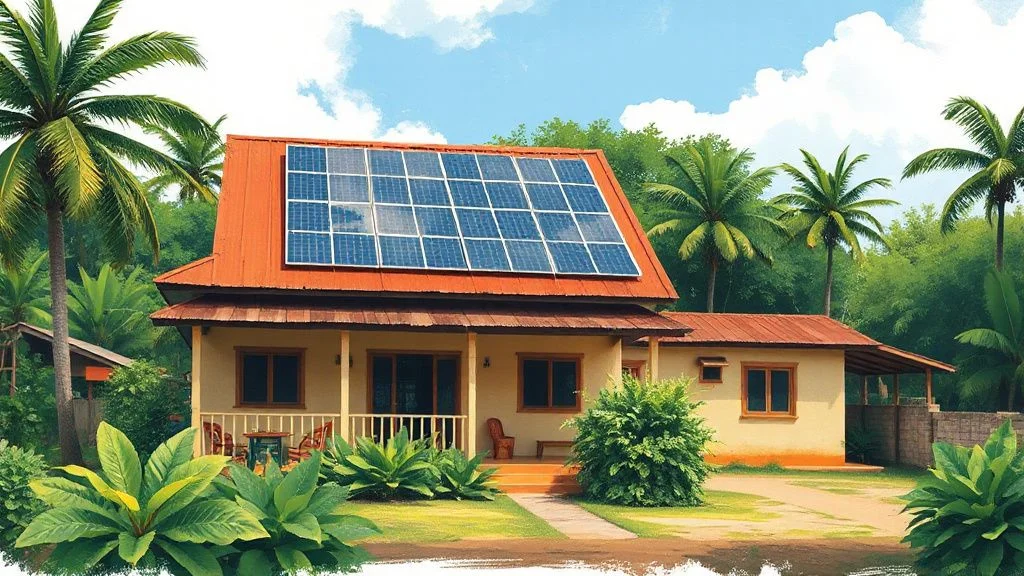
- Own Generation, Such as Solar Panels: own generation lowers what you draw from the grid, and that reduces the consumption part of the bill by itself. Whether any further incentive or reduction exists, and whether the fixed monthly charge still applies in full, is worth asking EBS directly; no published incentive scheme was found.
Understanding the Application Process
To apply for exemptions from water and energy bills, families must typically follow a structured process. This involves:
- Gathering Documentation: Applicants need to collect necessary documents, including proof of income, identification, and any relevant social welfare documentation. This can include pay stubs, tax returns, or letters from social service agencies.
- Go to the Provider: contact EBS for electricity and SWM for water. There is no municipal layer to approach and no district rulebook on utilities: Suriname has districts and ressorten, and the supply conditions are national, so the rules do not differ by area.
- Submitting an Application: Once the necessary documentation is gathered, families can submit their applications. This may involve filling out forms and providing copies of the gathered documents.
- Awaiting a Decision: after submission there is usually a waiting period. Follow it up with the provider that took your request, quoting the date you submitted it, because that date is what you have to refer to.
Practical Tips for Securing Exemptions
For expatriates and locals alike, navigating the utility landscape in Suriname can be challenging. Here are some practical tips to help secure exemptions from water and energy bills:
- Stay Informed: tariffs and conditions change, and a change of that kind is announced by Staatsblad or by the provider rather than by a local office. Ask EBS and SWM how they announce tariff changes so that you hear about one before it reaches your bill.
- Network with Local Communities: Engaging with local community organizations can provide insights into available resources and support for securing exemptions. Many communities have groups focused on social welfare that can offer assistance.
- Consider Renewable Energy: Investing in renewable energy solutions, such as solar panels, not only reduces long-term utility costs but may also qualify households for exemptions or incentives. Research local programs that support renewable energy installations.
- Document Everything: Maintain thorough records of all communications and documents submitted during the application process. This can be invaluable if there are delays or issues with the application.
Challenges and Considerations
While exemptions can provide significant financial relief, there are challenges that families may face:
- The Framework Is Published, the List Is Not: the difficulty is not that rules vary by region, because they do not. It is that article 17 sets up the subsidy mechanism without naming the groups: those are decided by the Raad van Ministers and appear in the staatsbegroting. So the framework is findable and the eligibility is not, which puts the burden on you to get an answer in writing and keep it.
- Limited Awareness: Many families may not be aware of their eligibility for exemptions. Community outreach and education are crucial in ensuring that those who qualify can take advantage of available programs.
- Potential Delays: The application process can be slow, and families may experience delays in receiving approvals or benefits. It's important to plan for potential waiting periods and budget accordingly.
What Expats Should Know
For expatriates moving to Suriname, understanding the local utility landscape is essential. Here are some key points to consider:
- Language Barrier: Many official documents and communications may be in Dutch or Sranan Tongo. It may be beneficial to engage a local translator or seek assistance from community organizations that support expatriates.
- Banking and Payment Methods: Banking infrastructure in Suriname is not as developed as in many Western countries. Not all businesses accept card payments, and cash transactions are common. Ensure you have access to sufficient cash for utility payments.
- Understanding Local Norms: Familiarize yourself with local customs and practices regarding utility usage. This can help in managing consumption and understanding how to engage with local utility providers effectively.
Conclusion
The honest conclusion is narrower than the question suggests, but not empty. Subsidy for groups of customers is provided for in article 17 of the Electriciteitswet 2016; what is not published is which groups qualify, because the Raad van Ministers decides that and the amounts appear in the staatsbegroting. So this article cannot tell you that you qualify. It can tell you where the answer lives: EBS for the electricity tariff and SWM for water, both national; the responsible ministry for whether a subsidy decision covers your group; and the EAS as the regulator that supervises the tariff methodology. Ask in writing, keep the answer, and budget on the published tariff rather than on an expected exemption.