When considering moving to Suriname, understanding the monthly costs associated with utilities such as water and energy is crucial for budgeting. This article provides a detailed overview of what you can expect to pay for water and energy bills in a family house, along with practical tips for managing these expenses effectively.
Overview of Utility Costs in Suriname
In Suriname utility costs vary with location, household size and consumption habits, and the two to budget for are water and electricity. Access to the grid is wide and service quality is less consistent outside the urban belt, which affects what a household actually spends; the precise access percentages that circulate are not reproduced here because they could not be traced to a published national statistic.
Water supply is the other essential utility, and reliable access is distributed unevenly between the urban belt and the districts; again, no coverage percentage is quoted here for want of a traceable source. Paramaribo generally has the better infrastructure and the more consistent service. Utility costs do move, driven by policy decisions and by the exchange rate, which is why a figure always needs a date attached to it.
Typical Energy Costs for Family Houses
Electricity costs in Suriname are influenced by several factors, including the type of energy source used and the efficiency of household appliances. The majority of households rely on electricity for lighting, refrigeration, and air conditioning, especially given Suriname's tropical climate.
The electricity figure can be given exactly, because it comes from a measured register rather than from an estimate. The published tariff of N.V. Energiebedrijven Suriname (EBS), recorded with a measurement date of 1 December 2024, is a fixed charge of SRD 211.78 per month plus a banded rate per kilowatt-hour: SRD 1.9710 in the first band, SRD 2.8500 in the second and SRD 3.3300 in the third. The banding is the part that summaries usually drop, and it is exactly why a single average rate per kWh cannot describe a household bill: the same consumption costs a different amount depending on which band it falls into. Treat a tariff with a December 2024 measurement date as a starting point rather than as today's price, and confirm the current bands with EBS before you budget on them.
On the legal side, the sector runs under the Electriciteitswet 2016 (S.B. 2016 no. 42), and the Energie Autoriteit Suriname (EAS) is the regulator that supervises it and sets the cost price of electricity. The published text of that Act is a scan without a text layer, so this article names the Act and the regulator and deliberately quotes no article number from it.
Factors Affecting Electricity Bills
- Appliance Efficiency: The efficiency of appliances plays a significant role in energy consumption. Using energy-efficient appliances can reduce electricity bills significantly.
- Air Conditioning: Given the tropical climate, many families rely on air conditioning. This can lead to higher electricity costs, especially if units are not energy-efficient.
- Usage Habits: Families that are mindful of their electricity usage, such as turning off lights when not in use and using energy-efficient bulbs, can lower their bills.
Water Costs for Family Houses
For water there is no comparable published figure. The Surinaamsche Waterleiding Maatschappij (SWM) sets the tariff per cubic metre, and the rate per m3 that circulates in articles about Suriname has no traceable source behind it: the same number has been attributed to the IMF and to the IDB, and neither publishes a Surinamese household water tariff. So this article gives no rate. Ask SWM for the current tariff, whether it is banded by consumption, and whether a standing charge applies on top of what the meter records. Those three answers let you work out your own bill, which no average can do for you.
Consumption itself is the one thing you can measure yourself. Read the meter at the start and the end of a month and you have your own cubic metres, which is worth more than any family-of-four average: usage swings with shower frequency, laundry and especially garden watering. Take that figure to the SWM tariff and you have a real bill rather than an estimate of one.
Factors Affecting Water Bills
- Household Size: Larger families typically consume more water, leading to higher bills.
- Water Usage Habits: Practices such as taking shorter showers and fixing leaks can significantly reduce water consumption.
- Seasonal Variations: During the dry season, families may use more water for gardening and other outdoor activities, increasing their bills.
Understanding Hidden Costs
When budgeting for utilities, it is essential to consider hidden costs that may not be immediately apparent. For example, some families may need to pay additional fees for water connection or electricity installation, especially if they are moving into a new home. These one-time costs can range from a few hundred to several thousand SRD, depending on the provider and the specific requirements of the property.
Additionally, foreign residents should be aware of potential currency exchange fees when paying bills. Many utility providers may only accept payments in SRD, so it is advisable to have a local bank account to avoid additional charges associated with currency conversion.
Practical Tips for Managing Utility Costs
Managing utility costs effectively is crucial for families living in Suriname. Here are some practical tips to help you keep your water and energy bills in check:
- Invest in Energy-Efficient Appliances: Consider purchasing appliances with high energy efficiency ratings. While they may have a higher upfront cost, they can lead to significant savings on electricity bills over time.
- Monitor Usage: Keep track of your monthly utility consumption to identify trends and areas where you can cut back. Many utility providers offer online portals where you can view your usage history.
- Practice Water Conservation: Simple changes, such as fixing leaks, using water-saving fixtures, and being mindful of water usage during daily activities, can lead to substantial savings.
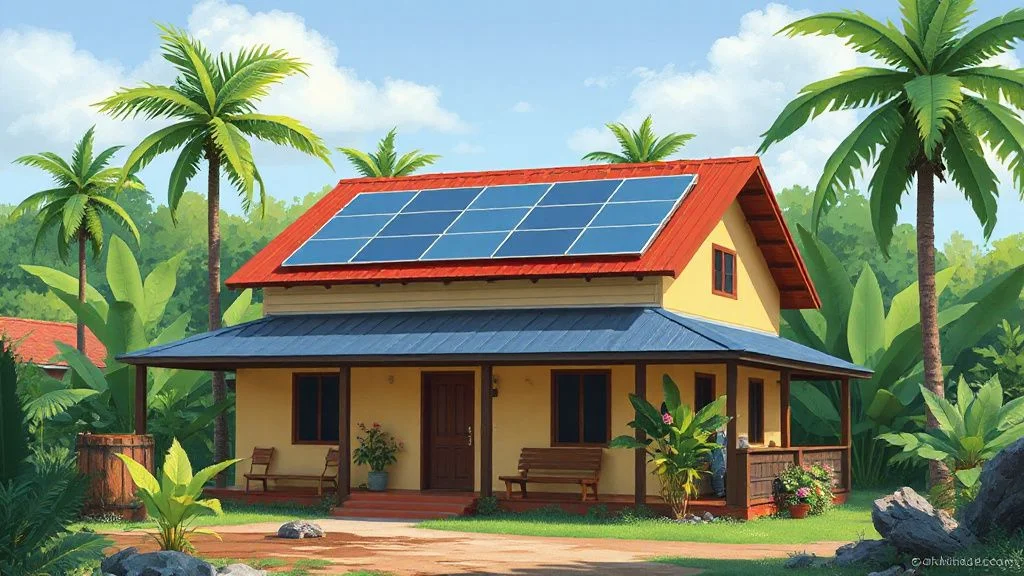
- Consider Solar Power: With the increasing availability of solar energy solutions in Suriname, investing in solar panels can significantly reduce electricity costs in the long run. Various government initiatives support renewable energy adoption, making it a viable option for many families.
What Expats Should Know
For expatriates moving to Suriname, understanding the local utility landscape is essential. Here are some key points to keep in mind:
- Payment Methods: Not all utility providers accept credit cards, so it is advisable to have cash or a local bank account for bill payments.
- Language Barrier: While many locals speak English, some utility providers may primarily use Dutch or Sranan Tongo. Familiarizing yourself with basic phrases can help ease communication.
- Who Actually Sets the Rules: there is no local layer to check. Suriname has districts and ressorten, not municipalities, and the rules on supply come from the national level: EBS and SWM set the tariffs and conditions, and the Energie Autoriteit Suriname supervises the electricity sector. Ask the provider directly rather than asking around.
Conclusion
Budgeting for water and energy in Suriname works better from the tariff than from an average. For electricity the published EBS tariff gives you a fixed monthly charge and a banded rate per kWh with a December 2024 measurement date; for water, ask SWM for the current rate because no reliable published figure exists. Read your own meters, apply the tariff that actually applies to you, and ask each provider for the current rates in writing. Energy-saving habits and careful water use still help, and for newcomers the practical points are the payment methods each provider accepts and the fact that the rules come from the national level rather than from a district office.