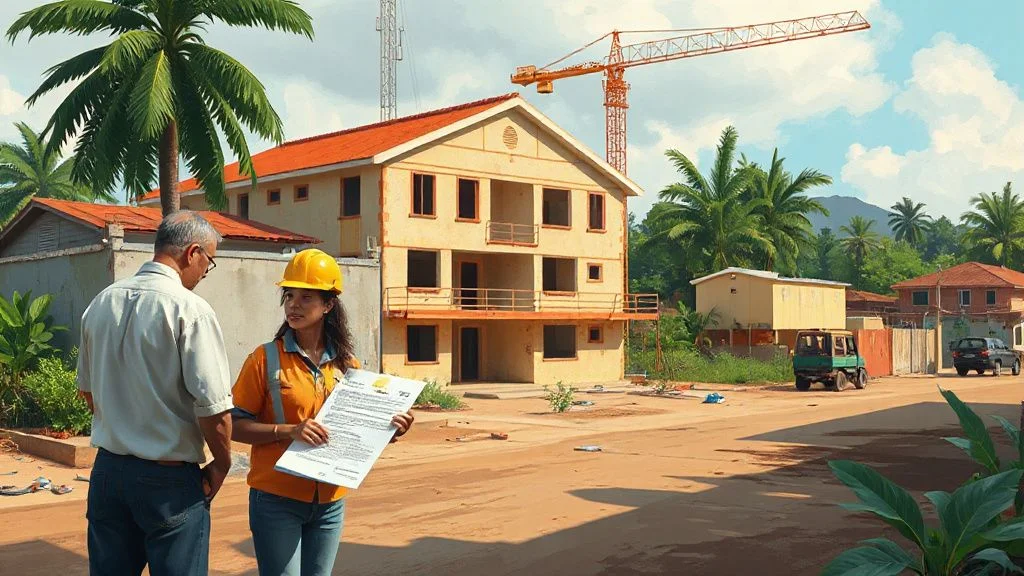
Two things in that question need straightening out before it can be answered. A building permit in Suriname does not come from the districtscommissaris: building rests on the Bouwwet 1956 (G.B. 1956 no. 30) and the Bouwbesluit 1956, under which written permission comes from the Directeur at Openbare Werken, and applications are filed at a One Stop Window. And what you pay is not a deposit but a fee for handling the application, which changes what a refund could even mean. This article sets out what the fee covers, what it costs, what is published about getting it back, and where to ask.
Understanding Building Permits in Suriname
In Suriname, building permits are essential for any construction or renovation project. These permits ensure that the proposed construction complies with local zoning laws, safety regulations, and building codes. The process typically involves several stages, including zoning confirmation, architectural design, and structural assessment. Each of these stages incurs fees, which can add up significantly.
Before diving into the refund policy, it is important to understand the components of a building permit application. The application process generally includes:
- Zoning Confirmation: This step involves verifying that the proposed use of the land aligns with local zoning regulations.
- Architectural Drawings: Registered professionals must prepare detailed plans that meet the local authority's requirements.
- Structural Design: Depending on the complexity of the project, structural designs may be required to ensure safety and compliance.
- Inspection Stages: The construction must be inspected at various stages to ensure adherence to approved plans.
What the Fee Covers and What It Costs
What you pay when you apply is a vergunningsrecht, a fee for having the application handled, and it is set nationally rather than per district. Article 3a of the Bouwwet is worked out in the Besluit Vergunningsrecht (S.B. 2023 no. 92), which sets a charge of SRD 50 per application plus unit rates per square metre or cubic metre according to the type of building. Because it is national, it does not vary by district, and because Suriname has districts and ressorten rather than municipalities, there is no municipal fee schedule to look up either.
That also settles what a refund would mean. A refund presupposes a deposit, a sum held against something that may or may not happen. A fee for handling an application is not a deposit: it is the price of work that is done as soon as the file is taken in. No published restitution scheme for the vergunningsrecht could be traced, and this article does not pretend there is one. It also does not claim the opposite, that nothing can ever be returned, because that would be just as unfounded. If you withdraw an application, ask at the One Stop Window of Openbare Werken what happens to the fee you have already paid, and ask for the answer in writing.
Figures do circulate for this. A refund of up to seventy-five percent on a written request within thirty days is the version most often repeated, sometimes attributed to municipalities. None of it could be traced to a Surinamese instrument, and the body it is attributed to does not exist here. Treat a specific percentage and a specific deadline offered without a source as what they are: someone's reconstruction of how such a scheme might work, not a rule you can rely on when you withdraw an application.
Conditions for Refund
While the possibility of a refund exists, several conditions must be met:
- Written Request: Applicants must submit a formal written request for a refund. This request should clearly state the reasons for withdrawal and include relevant application details.
- Act Early Anyway: no statutory deadline for such a request is published, so the thirty days you will see quoted is not a term you can hold anyone to. Put a withdrawal in writing as soon as you decide on it regardless, because the fee pays for work on your file and the less work has been done the better your position.
- Know What You Are Paying For: the charge is made up of a fee per application plus unit rates by building type, so a larger building costs more to apply for. There are no state surcharges in Suriname, which has no states; a fee table listing one is a foreign table that has been copied across.
Examples of Refund Scenarios
To illustrate the refund process, consider the following scenarios:
- Withdrawing an application: an applicant submits a file and then withdraws it, for example because the financing falls through. What happens to the fee already paid is not settled by any published rule, so this is the moment to ask the One Stop Window directly rather than to assume a percentage. Ask what has already been assessed, since that is what the fee has been spent on.
- Scenario 2: An applicant submits their application but fails to provide the necessary architectural drawings. The local authority may reject the application, and the applicant may not be eligible for a refund if they do not respond promptly or if the rejection is based on their failure to comply with submission requirements.
Steps to Request a Refund
If you find yourself in a position where you need to request a refund for a building permit, follow these steps to ensure a smooth process:
- Review the Refund Policy: Before submitting your request, familiarize yourself with the specific refund policy of your local district commissioner. This information can typically be found on their official website or by contacting their office directly.
- Prepare Your Request: Draft a formal letter requesting a refund. Include your name, contact information, application number, and a clear explanation of why you are requesting the refund. Be concise and professional.
- Submit Your Request: Deliver your refund request to the appropriate office, either in person or via email, depending on the district's procedures. Ensure you keep a copy of your request for your records.
- Follow Up: After submitting your request, follow up with the district office to confirm receipt and inquire about the timeline for processing your refund. This proactive approach can help expedite the process.
Common Pitfalls to Avoid
When navigating the building permit application and refund process, several common pitfalls can lead to complications:
- Missing Deadlines: Failing to submit your refund request within the stipulated timeframe can result in losing your eligibility for a refund. Always mark important dates on your calendar.
- Incomplete Applications: Submitting an incomplete application can lead to delays or rejections. Ensure that all required documents are included before submission.
- Ignoring Non-Refundable Fees: Be aware of which fees are non-refundable to avoid surprises when requesting a refund.
What Expats Should Know
For expatriates looking to navigate the building permit process in Suriname, understanding local regulations and procedures is essential. Here are some practical tips:
- Consult Local Experts: Engage with local architects, contractors, or legal advisors who are familiar with the building permit process in Suriname. Their expertise can help you avoid common mistakes and streamline your application.
- Language Barriers: If you are not fluent in Dutch, consider hiring a translator or bilingual professional to assist with your application and communication with local authorities.
- Read the National Rules, and Check for a Heritage Overlay: the requirements are national, so there is no district rulebook to hunt for. What genuinely differs by location is whether your plot carries an overlay: in the protected historic inner city of Paramaribo the Monumentenwet 2002 and the Bouwcommissie add requirements on top of the Bouwwet.
Conclusion
In summary: the permit does not come from the districtscommissaris but from the Directeur at Openbare Werken under the Bouwwet 1956, applied for at a One Stop Window, and the fee is a national charge for handling your application under the Besluit Vergunningsrecht. Whether any of it comes back if you withdraw is not something a published rule answers, so ask the counter that took your file and keep the reply. For newcomers an architect or contractor who files regularly is worth more than general advice, because they know which annexes are being asked for this year. And consult the instruments themselves or a professional rather than a percentage you read somewhere.