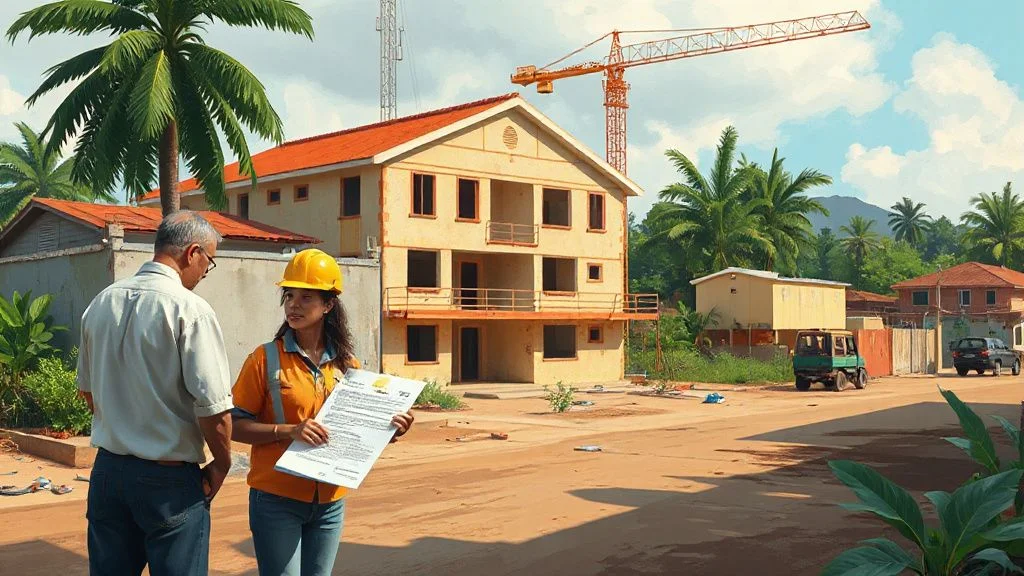
Boundary disputes between neighbours can arise for various reasons, including unclear property lines, changes in land use, or even natural changes in the landscape. In Suriname, these disputes can be particularly complex due to the legal framework that governs property ownership and land use. A boundary dispute is not something that gets renewed, and it is worth being precise about that, because the word points at the wrong remedy. A dispute either runs or it has been settled or decided, and what reopens it is a new fact, not a renewal: a fresh survey, a document nobody had, or an encroachment that was not there before. After a judgment the route is an appeal, not a renewal. This article sets out what the Surinamese land titles actually are, what a fresh survey can and cannot settle, and what to do when a neighbour builds over the line.
Understanding Boundary Disputes
Boundary disputes typically arise when two property owners disagree on the exact location of their property lines. This can happen for several reasons, such as the lack of clear documentation, changes in the landscape, or even misunderstandings about historical agreements. In Suriname the rules are national ones, and the records that decide the question are the registered title and the measured line, which is unfamiliar ground for a buyer from abroad precisely because those two can differ.
Types of Boundary Disputes
Boundary disputes can be categorized into several types:
- Physical Encroachments: This occurs when one property owner builds a structure or plants trees that extend onto a neighbour's land.
- Documentary Disputes: These disputes arise from conflicting property deeds or surveys that indicate different boundary lines.
- Natural Changes: Changes in the landscape, such as erosion or flooding, can alter the perceived boundaries of a property.
The Legal Framework in Suriname
In Suriname, the legal system is based on Dutch civil law, which means that property rights and boundary disputes are governed by specific laws and regulations. Foreigners looking to purchase property must be aware of the restrictions that apply to different types of land, such as domain land and lease land. Understanding these distinctions is crucial when dealing with boundary disputes.
Both halves of that need correcting. Domeingrond is State land, and since 1 July 1982 the title under which it is issued is grondhuur, not erfpacht: articles 14 to 35 of the Decreet Uitgifte Domeingrond (S.B. 1982 no. 11) govern it, and article 14(3) sets its term at grant at no less than fifteen and no more than forty years, against an annual fee. The seventy-five-year figure belongs to erfpacht issued before that date, and for those older titles the Decreet rechtstoestand vóór 1 juli 1982 uitgegeven gronden (S.B. 1982 no. 12) states in article 1(1) that when the term expires no extension of the right will take place any more. Nor is it true that foreigners can only hold a lease. Article 3(1) of the Decreet Uitgifte Domeingrond, as amended by S.B. 2003 no. 7, allows domeingrond to be granted to others with the consent of the Raad van Ministers, the former nationality bar in article 5 was repealed by that same amendment, and article 3(2) only provides that a foreigner who has been granted domeingrond and who leaves Suriname permanently is declared to have forfeited the right. Privately owned freehold land is not domeingrond at all and the decree does not reach it. Take advice on your own title rather than on a general rule.
What reopens a boundary dispute
What reopens a boundary dispute is a new fact rather than a renewal: a fresh survey, evidence that was not available before, a change in how the land is used, or a change of owner. Each of those can justify going back to the other side or to the court, and none of them is a procedural step with a name of its own. These are the situations that in practice bring a settled boundary back into question:
New Evidence or Surveys
One of the most common reasons for a settled boundary coming back into question is the emergence of new evidence. This could be in the form of updated surveys, historical documents, or even testimonies from previous owners. In Suriname a fresh survey is carried out by a sworn surveyor, a beëdigd landmeter, and the Decreet Uitgifte Domeingrond assumes that professional throughout: article 5(2) requires a specific application for domeingrond to be accompanied by a figurative map made by a surveyor in Suriname, and article 5(3) has the Dienst der Domeinen work with a surveyor named by the applicant. Alongside the survey, ask a notary for an extract from the Openbaar Register kept by MI-GLIS, because the registered title and the measured line are two different records and a dispute usually sits in the gap between them.
Cadastral work is done by a sworn surveyor, and that sworn quality, not a local standard, is what makes the result usable: there is no municipal layer setting survey rules, because the country has districts and ressorten and no municipalities. The results can be used as evidence if the dispute escalates. Costs vary, so ask for more than one quotation, and ask the notary who would have to use the survey whose work is accepted rather than going on advertised credentials.
Changes in Property Use
Changes in how a property is used can also bring a boundary back into dispute. For example, if a neighbour builds a fence or structure that encroaches on another's property, it may prompt the affected party to revisit the boundary. In Suriname an owner can challenge such an encroachment, and in practice that starts with a written, dated notice to the neighbour setting out the issue and asking for a resolution. Keep the proof of sending.
In some cases, mediation can be an effective way to resolve these disputes without resorting to litigation. Mediation involves a neutral third party who can help facilitate a discussion between the disputing parties. This process can save time and money compared to going through the courts.
The Legal Process for Resolving Boundary Disputes
When a boundary dispute cannot be resolved amicably, property owners may need to pursue legal action. The legal process for resolving boundary disputes in Suriname typically involves several steps:
1. Attempting Amicable Resolution
Before taking legal action, it is advisable to attempt to resolve the dispute amicably. This can involve direct communication with the neighbour to discuss the issue and explore possible solutions. If both parties can agree on a resolution, it can save time and legal expenses.
2. Sending a Formal Notice
If an amicable resolution is not possible, the next step is to send a formal notice to the neighbour. This notice should outline the nature of the dispute, the evidence supporting your claim, and a request for resolution. It is advisable to send this notice via registered mail to ensure there is a record of communication.
3. Engaging Legal Counsel
If the dispute remains unresolved, engaging an attorney who specialises in property law is crucial. The attorney can advise on the best course of action and represent you in proceedings. Property and registration law in Suriname is national law, so what matters is that the lawyer works in this field and knows the registers, not that they know a local ordinance: there is none.
4. Filing a Lawsuit
If all attempts at resolution fail, the final step may involve filing a lawsuit in the appropriate court. The court will review the evidence presented by both parties and make a determination regarding the boundary lines. This process can be lengthy and may require additional surveys or expert testimonies. It is essential to be prepared for potential delays and costs associated with litigation.
Practical Tips for Property Owners
For property owners in Suriname facing boundary disputes, here are some practical tips to consider:
- Document Everything: Keep detailed records of all communications, surveys, and any changes made to the property. This documentation can be invaluable in legal proceedings.
- Know Your Rights: Read your own title and the register extract, and know that the rules on property and registration are national. Understanding what your title actually says is what empowers you in negotiations and in court.
- Consult Professionals: Engage with licensed surveyors and legal professionals who can provide expert advice and representation. Their expertise can help you navigate the complexities of boundary disputes.
- Consider Mediation: Before escalating the dispute to litigation, explore mediation as a potential solution. This approach can save time and resources while fostering a more amicable resolution.
- Be Patient: Boundary disputes can take time to resolve, especially if they involve legal proceedings. Patience and persistence are key to achieving a favorable outcome.
Conclusion
Boundary disputes with neighbours can be complex and challenging, particularly in Suriname's legal landscape. Understanding the types of dispute, the legal framework, and what actually reopens a settled boundary, which is a new fact and not a renewal, lets property owners act on the right remedy. By documenting evidence, having the line measured by a beëdigd landmeter, seeking professional guidance and exploring an amicable resolution first, owners can work towards an outcome that protects their rights.